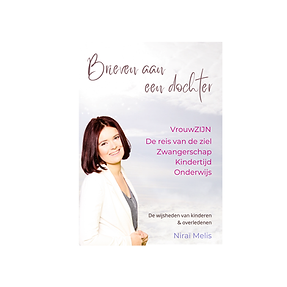
The wisdom every daughter needs to know


Matrescences:
your changing identity as a new mom
Wisdom Course
Welcome to this free Wisdom Course
Becoming a mother changes you in a single day — your brain, your body, your hormones, your role, and how the world sees you. There is a name for this transformation: matrescence. In this course, you'll learn what happens to your identity when you become a mother, why it can feel so disorienting, and how to find your footing again without losing yourself in the process.
Guideline
What you'll learn today
-
What matrescence is, and why your identity changes all at once rather than gradually
-
How your brain, hormones and body continue changing well beyond birth
-
Why the first forty days after birth matter for your recovery
-
How the world around you starts to treat you differently as a mother
-
Why an identity crisis is a normal part of early motherhood, not a sign that something is wrong
-
How to find balance between who you were and who you're becoming
What children and moms have told me
Why you feel as a different person after birth?
What is matrescence?
Most identity shifts in life happen gradually. Motherhood is different: your identity and your role change almost overnight. Matrescence is the term for this transformation — the psychological and physical process of becoming a mother.
Your brain begins changing during pregnancy, often before you notice it yourself. After birth, your body, hormones and daily life shift again, and you find yourself building a new identity around being "mom of…" — often becoming your primary identity in the first months, even as your other roles (partner, colleague, friend) quietly come under pressure.
The forty-day recovery period
Your body and mind need roughly forty days to close out the major processes of pregnancy and birth, and begin new ones — for your organs to settle, and for your body to find a new baseline of stability. Many cultures build this recovery time into tradition, passed down from mother to daughter for generations.
Give yourself permission to rest fully in this window, even if you start to feel physically fine sooner. Ask for support with the care of your baby so you can use this time to heal, and pay attention to what nourishes your recovery — many traditions of rest and nutrition after birth (such as Traditional Chinese Medicine) place particular value on this period for good reason.
Your changing body, brain and hormones
Pregnancy reshapes more than your body. Research on maternal brain structure — including work by Leiden neuroscientist Elseline Hoekzema — shows that pregnancy changes brain structure in regions tied to social attunement, and that this change lasts at least two years after birth. Your hormones can take up to two and a half years to settle into a new normal, and your body may carry lasting physical changes that never fully return to how they were before.
None of this is something to fix or apologize for. Your body did significant work, and it deserves care and appreciation for that — not comparison to an idealized "before."
How the world starts to see you differently
Motherhood changes how people relate to you, often in ways nobody prepares you for. Conversations shift toward your baby before they reach you. Friendships can drift when you're no longer moving at the same pace as before. At work, your role, hours and opportunities may shift too — even though the underlying skill and dedication that full-time caregiving requires rarely gets the recognition it deserves.
Knowing this in advance can make it easier to navigate. Naming it out loud — to your partner, your friends, your family — often makes it feel lighter.
Finding balance between your old and new identity
You are still the woman with her own dreams, needs and wishes — not only "mom." Many mothers find it hard to hold onto their other roles once a child arrives, especially in the early years, when hormones are working hard to keep your focus on your baby.
That balance takes active effort: asking clearly for support, protecting time for yourself, and giving yourself permission to want things beyond caregiving. It's a normal part of motherhood to feel stretched between who you were and who you're becoming — and recognizing that helps you move through it with more ease.
How to make it your own
Practise to learn
-
Notice one moment this week where you feel pulled between an old identity (partner, friend, professional) and your new role as mother. Write down what each version of you needs.
-
Give yourself permission to grieve one specific thing about your old life, without guilt — grief and gratitude can coexist.
-
Ask one person for one concrete piece of support this week, instead of waiting for it to be offered.
Frequently asked questions
What is matrescence?
Matrescence is the psychological and physical process of becoming a mother — a rapid shift in identity, brain, hormones and body that begins in pregnancy and continues well beyond birth.
How long does it take to adjust to my new identity as a mother?
It varies by woman, but many mothers need a year or more to feel at home in their new identity. Hormonal changes alone can take up to two and a half years to fully settle.
Why do I feel like I've lost myself after becoming a mother?
Your identity genuinely does shift all at once rather than gradually, while your other roles — partner, colleague, friend — come under real pressure. Feeling unmoored for a while is a normal part of matrescence, not a sign that something has gone wrong.
Why is the first forty days after birth important?
Your body and mind use this period to complete the major physical and psychological processes of birth and begin new ones. Resting fully during this window supports both your physical recovery and your emotional adjustment.
Is it normal to grieve my old identity?
Yes. You've genuinely let go of a former version of yourself, and grief is a healthy response to that. Giving yourself space to grieve — alongside embracing who you're becoming — helps you move through the transition with more ease.
Interesting blogs


You'll find more in these books