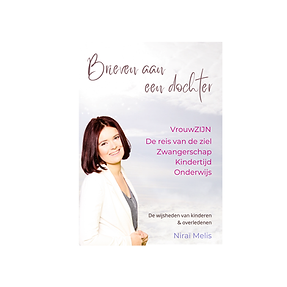
The wisdom every daughter needs to know


How to prevent that your child inherits trauma during pregnancy?
Wisdom Course
Welcome to this free Wisdom Course
During pregnancy, you pass on more to your child than just her body. Through your blood, your cells, and your energetic bond, she shares in what you experience — and sometimes even in what your foremothers experienced. In this course, you'll discover how this works, and above all: what you can do to give your child as light a starting point as possible.
What you'll learn about trauma and pregnancy
-
How you pass on genetic material to your child during pregnancy, and why healing before pregnancy carries so much value
-
How the energetic bond with your child works, and why acknowledging your own emotions helps her
-
How trauma can pass down through the female line, from generation to generation
-
Why your child can't always place events in context yet, and how you can help her with that
What children and moms have told me
How trauma and stress can affect your child during pregnancy
You pass on genetic material during pregnancy
Your child is nourished by your blood for the first nine months of her life — and with it, by your cells. Every cell carries its own memory: what you experience and feel gets stored in your cells, and that information gets passed on. So your child receives not only the building blocks for her body, but also a share of your experiences, patterns and beliefs.
This is what makes the period before pregnancy so valuable. Every piece of healing you work through before conception becomes a lighter, stronger foundation you pass on to your child. You don't need to be perfect before you conceive — but every step you take matters.
Your child bonds with you energetically
Your child experiences pregnancy more consciously than you might think. She picks up on nearly everything happening around you — your emotions, the atmosphere at home, events in your life. What she can't do yet is always place that information in context.
This is why acknowledging your own emotions and feelings during pregnancy matters so much. Not by avoiding difficult things — those are part of life, and your child is welcome to be part of them too — but by consciously making space for what you feel, rather than pushing it down. That acknowledgment is what prevents an emotion from lingering, unprocessed, in your bond.
Intergenerational trauma and the female line
The trauma your child may carry doesn't only come from your own life. Through the female line — the energetic and genetic connection between the generations of women in your family — you inherit patterns, pain and lessons from your mother, your grandmother, and the women before them. This inheritance can reach back as far as seven generations.
This means your foremothers' pain can live in your body, even without you having experienced it yourself. Recognizing this isn't a burden — it's an opportunity: by healing yourself, you change not only your own story, but also what you pass on to your daughter and the generations after her.
How your child may experience emotions during pregnancy
Your child feels and takes in a great deal, but often lacks the context to interpret it correctly. A difficult moment between you and your partner, or a period when you're ill or emotionally absent, can easily be taken personally — even though it has nothing to do with her.
Talk to your child about what's happening, even while she's still unborn. Explain what's going on, why you feel sad, angry or stressed, and make clear that it isn't about her. This simple habit helps her process difficult moments in a healthy way, instead of carrying an unnecessary trauma from them.
Healing family patterns during and after pregnancy
Practise to learn
-
Choose one healing step you can take before (or during) your pregnancy — a conversation, therapy, or simply taking time to process something.
-
Talk out loud to your child this week (even if she's still unborn) about something on your mind, and explicitly name that it isn't her fault.
-
Ask yourself which pattern or belief you recognize from your mother or grandmother — and what choice you'd want to make differently.
Frequently asked questions
Do you really pass on trauma to your child during pregnancy?
Through your cells and blood, you pass on your experiences, emotions and patterns to your child — including unprocessed trauma. This isn't fixed; it's something you can influence, especially through healing before and during pregnancy.
Can my baby develop trauma during pregnancy?
Yes. Your baby takes in nearly all the information around her, but can't always place it in context yet. Without explanation, she may misinterpret a difficult situation and carry an unnecessary trauma from it.
Does stress during pregnancy affect my baby?
Yes. Your baby shares in your emotions and surroundings, including stress. That doesn't mean you need to avoid stress — it's part of life — but it does mean it's valuable to bring her along in what's happening and why.
What is the female line?
The female line is the invisible energetic and genetic connection between the generations of women in your family — you, your mother, your grandmother, and the women before them. Through this line, you inherit not only character traits, but also patterns, pain and life lessons.
What is intergenerational trauma, and can you inherit it from your mother or grandmother?
Intergenerational trauma is pain passed down from generation to generation, without you needing to have experienced it yourself. Through the female line, you can inherit trauma from your mother, grandmother and foremothers — this inheritance can reach back as far as seven generations.
Can healing during pregnancy help break family patterns?
Yes. By healing yourself, you change not only your own story, but also what you pass on to your child and the generations after her. Every step you take helps prevent a pattern from being passed on unchanged.
How do I prevent my emotions from becoming a trauma for my child?
Talk to your child. Explain what's happening, name the cause of an emotion or conflict, and make clear that it isn't about her. This explanation helps her process the situation in a healthy way, rather than taking it personally.
How can I reassure my child during pregnancy?
Talk to her regularly, even while she's still unborn — tell her about your day, explain your emotions, and remind her that she's a bright spot in your life. This simple, repeated reassurance helps her feel safe and welcome.
Is it too late to start healing if I'm already pregnant?
No. Every healing step you take, during pregnancy or after, gives your child a lighter foundation to carry. There's no "perfect" timing — every step counts.
Interesting blogs


You'll find more in these books