The wisdom every daughter needs to know


What is a matriarchal society?
Meaning, examples and what daily life is like
Welcome to this free Wisdom Course
The children I spoke to told me about the world where feminine energy leads: the Matriarchal World, or the Old World. A matriarchal society is a society where women, and the values of motherhood, sit at the centre. Care for life, consensus and balance guide every decision there. Researchers stress that a matriarchy is a society in balance, not a mirror image of patriarchy with women on top. Our way of thinking, our knowledge, our values and every decision we make are completely different from today's.
Daily life revolves around community, abundance, sharing, nature and respect for every person.
Welcome to this wisdom course.
What you'll learn today
-
What children have told me about the Matriarchal World
-
What education looks like in the Matriarchal World and how it leads to a stable society of abundance
-
What daily life looks like in the Matriarchal World
-
How relationships, homes, work, health and learning are organised there
-
How you can bring the matriarchal way of life into your own life today
The short answer
How are children raised
A matriarchal society is a society where women, and the values of motherhood, sit at the centre. Care for life, consensus and balance guide every decision there. Researchers stress that a matriarchy is a society in balance, not a mirror image of patriarchy with women on top. Our way of thinking, our knowledge, our values and every decision we make are completely different from today's. Daily life revolves around community, sharing, nature and respect for every person.
What children and moms have told me
Daily life in the Matriarchal World
What children tell me about the Matriarchal World
As a child whisperer, I listen to what young children tell me. Their world can sound like a dream world, and for them it is reality. Many young children remember where they come from: a world full of love, where everyone is cared for, and where poverty and pain are unknown.
Young children look at everything around them with love and wonder. They still see elderly people, sick people, animals, plants and trees as they truly are. Because they are so open, they quickly notice what people could do differently or better. Litter and poverty are examples, just like people who are sick or unhappy. Young children often find this hard to understand, because they come from a world where all of this is absent.
Creating that society is easier than it seems. Children tell you what it looks like. They are the fresh view our world needs to grow, and the fresh view parents need to bring new and better habits into their family. It is easier to live together in a world of wealth and abundance. We live in that world too; we simply make choices that also create poverty. By listening to children, we can make different choices.
Daily life in the Matriarchal World
Now I take you to the world I describe in my books, the Old World. In this world we live together in a different way. Feminine energy and women lead, because women carry the power of life: the creative force that gives life to people, plants, animals, things and visions.
The women of the Matriarchal World are powerful, strong, full of self-confidence, loving, wise, self-reliant and serving their people. They have humour, love to come together to dance and sing, and create life around them. Women radiate, equal to the sun in the universe. Men are strong, skilled, caring, tolerant and protective, and they radiate strength, trust and wisdom, equal to the moon. Every woman is safe, every man is safe. Both feel heard, seen and valued. You can read more about this in the course What is the role of men in a matriarchal society?
People in the Old World are physically and mentally healthier. They live longer, sometimes up to a thousand years. A person of a hundred is still young in our eyes. People live together with nature. Nature is healthy and rich in animals and a diversity of plants. There is enough food to find in nature, and people need to take little care of the growing process.
Living in balance and in peace
Of course people sometimes disagree in the Matriarchal World, and quarrels or fights rarely happen. People live in respect and peace with each other, because they feel different from how we feel. The people of the Old World are in balance and feel loved, valuable and important. So they make their choices from love and respect for themselves, others, animals and nature.
This shows in the way they communicate. When you love yourself and respect the other, a disagreement simply becomes a conversation. You respect rejection and the boundaries of others. You are honest in business, and the quality of your product or service always comes first, because you want your customers to be better off with what you offer.
From a young age, people in the Old World learn to keep feminine and masculine energy in balance, side by side and intertwined, like two colours of a rainbow. It is one of the most important human skills, because this balance shapes the people around you, your world and the Earth as a whole.
Sharing without money: a life in abundance
The Old World knows no money as a means of exchange. It knows only the principle of sharing, giving and taking what you need. People can visit a maker to take or use the products he or she makes. The maker lives in abundance, because he or she can also receive everything needed everywhere. Food is almost never scarce. New products are sometimes scarce, and those are traded for goods such as grain and meat, in a way that leaves everyone enough to live.
We live together and share what we have. We exchange when needed, spend time together and help where we can. This is what abundance means in the Matriarchal World: enough of everything you truly need, for everyone. You can read more about how this economy works in the course on politics and the economy of the Matriarchal World.
How a farmer works with the Earth
People in the Old World live in close connection with nature and actively use its knowledge. Every spring, a farmer asks the Earth what she needs this season to grow the best fruits and seeds. The farmer follows her advice and makes sure the Earth receives what she needs. The farmer even lets the Earth choose the way the land is worked. So every year, people eat the best, tastiest and most nourishing vegetables and fruit.
Children learn this from a young age. They learn to ask animals how they want to be cared for, to ask the Earth what she needs to give good fruits this year, and to ask the sky what weather the day will bring. This way of living is pleasant and efficient. Above all, it gives healthy food, a life in abundance and safety. Our energy is connected to the energy of the Earth. The better the Earth is doing, the better we are doing.
Relationships, homes and families
In the Old World souls are much freer, and people stand more in their power. A soul connection is the basis of every relationship. Relationships exist to bundle energies, so that people are stronger together. When souls merge from love, unknown forces and vibrations are released.
Living together is not a given. Partners often live apart, so that both have enough time to develop their inner selves. The home is seen as a sanctuary of its owner: a safe place, arranged so that your energy can recharge and be at its strongest. The length of a relationship is open too. Relationships always go by mutual agreement, and there is plenty of room for self-love.
A child is a child of the whole community. When a child wants to be born, she seeks contact with her mother, and together they choose the time of the pregnancy. That moment is celebrated: the child is already welcomed, the mother is honoured. The child is then entrusted to caregivers who suit her character and development. You can read more in the course How are children raised in a matriarchal society?
LeerRijk: learning in the Matriarchal World
In the Old World, the first thing we teach children is how to be human. Children learn from birth through the energetic connection with their mother, their caregivers and nature. Children can communicate with animals, plants, flowers and the Earth. The energy of nature tells them a lot, and through nature they also learn about themselves and their emotions.
We support children in their mission from birth. We tell them who they are, what they can do and what their purpose on Earth is. We teach them who the Earth is, how they may care for her and how to treat animals. We teach them to live in synergy with themselves, humanity and the Earth. We teach them that they may be proud, that they belong and that they are important, just as important as the animal kingdom, nature and the Earth.
Language, setting intentions, the power of thoughts, and working with your energy and emotions are compulsory subjects that every child follows from a young age. The words you choose, the thoughts you have and your energy have a great influence on the Earth, the universe and other people. Knowing these powers keeps a society peaceful and healthy.
All other subjects, such as physics, mathematics, building methods, baking bread, caring for complex wounds, healing herbs and astrology, are open whenever a person is ready for them. People choose a subject purely because it interests them. In LeerRijk, classes are formed by knowledge and not by age, so a four-year-old and a hundred-year-old can learn side by side. People and children learn from each other. When a small child finds an emotion hard to handle, there is an adult who can help. When a teenager struggles to focus, the laughter of a six-year-old is often exactly what helps.
Each subject has three levels: basic knowledge, higher knowledge and expertise. You decide yourself at which level you complete it. Tests are practical, and you take one when you feel ready. Because everyone chooses what to learn and when to be tested, people learn calmly and with confidence. When something is hard to learn, we first look for another way. When the time is not yet right, we say: "It is not your time yet; you have another path to walk first." People who live for a thousand years often choose a new profession or a new life path, and our learning material runs across a hundred school years.
The most important lesson is that children and people learn to be human and to live together in love and trust. Children who feel important, supported and helped perform at their best. They support each other and help each other learn, think and create. Knowledge is abundant too: everyone has access to all the knowledge on Earth.
Health and leadership
Medicine is holistic. People learn to see and understand the body before treating it, because every body is different. A diagnosis always looks at the cause behind the complaint, whether physical, emotional or external. People learn to speak with their pain and to ask the body what it needs. Plants, herbs and gemstones help, and when you can't find the answer yourself, there is always someone who can help you.
Every role goes to the person who suits it best. The wisest leaders form the Council of Wises: women, men and children who are asked, and then chosen, for their unique mix of talents. Often they are recognised in childhood, from the blueprint of their soul. You can read more about this in the course on politics and the economy of the Matriarchal World.
How to bring the matriarchal way of life into your life today
Free tips
1. Honour your women's line
Write down the names of your mother, grandmother and great-grandmother. What did each of them give you? Light a candle for them and thank them. The matriarchal way of life starts with honouring the women who came before you.
2. Make your home a sanctuary
Choose one place in your home that is only yours. Arrange it so that your energy recharges there, with natural materials, soft light and things you love. Treat it as your temple.
3. Share something without money
This week, give something you have plenty of: time, food from your garden, a skill, a listening ear. Notice how sharing makes you feel richer.
4. Raise children with many hands
Invite one extra loving adult into the life of your child or a child you know: an aunt, uncle, neighbour or friend. It takes a whole community to raise a child.
5. Decide in a circle
Next time your family, team or group needs to make a choice, sit in a circle. Let everyone speak, children included, and look for the answer that everyone can support. Ask yourself what this choice means for the seventh generation.
6. Spend time with nature every day
Go outside, touch a tree, listen to the birds or put your bare feet on the Earth. Ask nature what she wants to tell you. Living with nature is the heart of every matriarchal society.
Frequently asked questions
What is a matriarchal society?
A matriarchal society is a society where women and maternal values such as care, life and connection sit at the centre. Decisions are made by consensus, sharing keeps the economy in balance, and nature is honoured as sacred. Researchers describe matriarchies as societies in balance, where both women and men are valued.
What is the difference between matriarchal, matrilineal and matrifocal?
People often mix up these words, and each one tells you something different. Matrilineal means that descent, family name or property passes through the mother's line. Matrilocal means that a couple lives with or near the woman's family. Matrifocal means that the mother is the heart of the household. Matriarchal goes a step further: it describes a whole society in which women and feminine values guide the community. Many matriarchal societies are matrilineal, and some matrilineal societies have men in the main public roles.
Has there ever been a true matriarchy?
For a long time, many anthropologists said that a "true" matriarchy never existed, because they were looking for women who rule over men. Researchers who lived inside these communities saw something else. Anthropologist Peggy Reeves Sanday spent more than twenty years with the Minangkabau. In Women at the Center (2002) she describes a matriarchy as a society where maternal values such as nurturing, care and life sit at the heart of social life. Philosopher Heide Goettner-Abendroth, founder of Modern Matriarchal Studies, calls matriarchies "egalitarian societies of consensus" and "societies in balance". This is also how I see it. In the Matriarchal World, women and feminine energy lead, and men are the cement that binds the community together. Both are equally valuable.
What are the characteristics of a matriarchal society?
When you place matriarchal societies side by side, a clear pattern appears:
-
The mother's line gives security. Women and children always have a home and land, whatever happens in a relationship.
-
Care comes first. Children are raised by many hands: mothers, grandmothers, aunts and uncles. Anthropologist Sarah Blaffer Hrdy (Mothers and Others, 2009) shows that humans evolved as cooperative breeders who raise children together.
-
Decisions are made together. Leaders listen, advise and seek consensus.
-
Sharing is normal. What the land gives is shared within the family and the community.
-
Nature is sacred. Land is a gift to care for across generations.
-
Men have an honoured place. As brothers, uncles, protectors and travellers, men are part of the heart of the family.
Goettner-Abendroth names the same features: kinship through the mother, economic balance through sharing and gifts, decisions made by consensus, and a sacred bond with nature.
Do matriarchal societies still exist today?
Yes. Well-known examples include the Mosuo in China, the Minangkabau in Indonesia, the Khasi in India, the Bribri in Costa Rica, the Akan in Ghana and the Haudenosaunee in North America. The Minangkabau of West Sumatra are the largest matrilineal society in the world, with several million people. Worldwide, more than 160 matrilineal communities are known.
What is daily life like in a matriarchal society?
Daily life revolves around family, community, sharing and nature. Children are raised by many hands, homes offer safety, and decisions are made together. In the Matriarchal World I describe, people live in peace, share without money, learn their whole life long and live in abundance, in balance with the Earth.
What role do men play in a matriarchal society?
Men are indispensable. They are the cement that binds the community together: brothers, uncles, fathers, protectors and advisors. In the Matriarchal World men are strong, skilled, caring and protective, and they are honoured as equals.
Can a matriarchal society exist in the modern world?
Yes. The Minangkabau live in modern cities and study at universities, and they keep their matrilineal customs alive. Every community can start by putting care, consensus, sharing and nature at its centre.
Interesting blogs


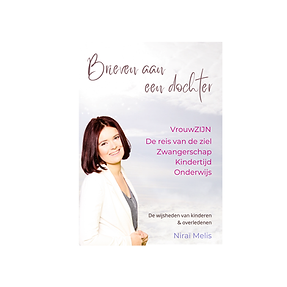
You'll find more in these books